Evensong by Kate Southwood
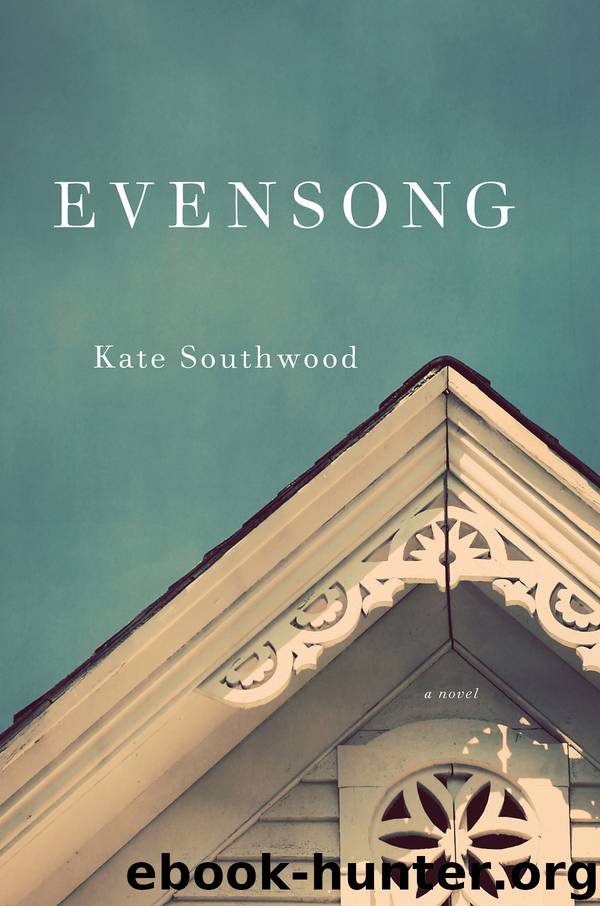
Author:Kate Southwood
Language: eng
Format: epub
Publisher: W. W. Norton & Company
17
It’s easy to pick out the bad things, of course. They stay with you. But it seems a worse thing to be reminded of something you’d thought was forgotten and see it perpetuated and reenacted by the next generation. It was one thing to sit with Joanne in front of the picture window, looking at the birds that came to the feeder in the pear tree, and listen to Garfield hold forth about each one’s virtues and defects, to hear him deride the cardinals for being merely pretty, and praise the blue jays, who were handsome birds and bold besides, and it was something else again to later hear Joanne tell Melissa that she was wrong about my crows, that they couldn’t be her favorite bird because their voices were ugly.
I had preferred the cardinals to the jays, but that was wrong. A blue jay is a bird you can admire, Garfield said. They’re forceful, never cowardly.
They’re bullies, I said.
Perhaps, he said.
Garfield was nothing more than a blue jay, himself. The bully who blinds you with his plumage, who gets what he wants and tells you what to think while he’s getting it. Why on earth shouldn’t a child love a crow for its squawk? Why shouldn’t the commonplace be the thing that beguiles? When Melissa was small, she loved dandelions, and the cornflowers that grew everywhere in summer, but Joanne sniffed. Weeds, she said, and Melissa learned to keep her thoughts to herself.
If I’d had my wits about me that first day, I’d have reminded Garfield that there was no bird I resembled so much as the cardinal, the small brown female whose plainness is her virtue. We were that far-fetched as a pair, Garfield and I. The dazzling bird alights and rides the slow bounce of the branch, the dun female stands behind the foliage, the intimation of red betrays her, and the blue head turns.
No one ever needed to think a thought around Garfield; he would think them for you. You needn’t ever wonder about anything, either, or cultivate opinions or judgments. He’d cheerfully set you straight. Pointing out weakness where he saw it was an indoor sport, and Garfield construed fine qualities like kindness or caution as weakness when and where it suited him. He felt entitled to do it, somehow, and if you didn’t agree that he was doing you a service, that was all right; he knew he was, and that was good enough for the both of you for now. Weakness of character, spinelessness he would have called it, galled him most, and he laughed at the dinner table when he told about the big men who soaked their shirts in his chair, whose chests he had to lean on to hold them down through their extractions, calling them craven instead of merely fearful.
He’d say, Give me a little old lady any day, or better yet, my own daughter. She has the sense to grip the chair arms and keep quiet while I work.
Download
This site does not store any files on its server. We only index and link to content provided by other sites. Please contact the content providers to delete copyright contents if any and email us, we'll remove relevant links or contents immediately.
In Control (The City Series) by Crystal Serowka(36355)
The Wolf Sea (The Oathsworn Series, Book 2) by Low Robert(35376)
We Ride Upon Sticks by Quan Barry(34726)
Crowbone (The Oathsworn Series, Book 5) by Low Robert(33769)
The Book of Dreams (Saxon Series) by Severin Tim(33530)
The Daughters of Foxcote Manor by Eve Chase(23776)
Trainspotting by Irvine Welsh(21978)
Call Me by Your Name by André Aciman(20720)
The Secret History by Donna Tartt(19470)
Shot Through The Heart (Supernature Book 1) by Edwin James(19045)
All the Missing Girls by Megan Miranda(16700)
American King (New Camelot #3) by Sierra Simone(16593)
The Girl from the Opera House by Nancy Carson(15894)
Pimp by Iceberg Slim(14796)
Sad Girls by Lang Leav(14635)
The Betrayed by David Hosp(12985)
The Betrayed by Graham Heather(12963)
4 3 2 1: A Novel by Paul Auster(12612)
Still Me by Jojo Moyes(11473)
